When you run a high-traffic restaurant, reducing overhead costs and saving time are among your top priorities. Chefs have discovered that
sous-vide cooking is not only a highly efficient method but also saves time and money. We've explored the benefits of this popular cooking method, the necessary equipment, and how to use
sous-vide to prepare various dishes. Keep reading to learn more about
the sous-vide cooking technique and how it can benefit your establishment.
What is Sous Vide?
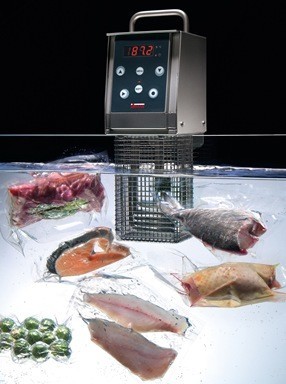 Sous Vide cuisson, literally translated from French as "vacuum cooking," is a slow-cooking process (from 1 to 96 hours) of vacuum-sealed foods at a precisely defined temperature (usually 50-75°C). This technology (pronounced "Quison sous vide" or simply "sous-vide," less commonly "Soo-vide" and "Sous-wide") utilizes precise temperature control to cook food thoroughly and consistently. Developed in the mid-1970s by a French chef, this cooking method has become an integral part of many professional kitchens. The technology relies on water's ability to evenly and gradually transfer heat to foods (water is known to do this many times more effectively than hot air in a combi-oven ), combined with the guaranteed protection of the food's structure provided by vacuum packaging. Vacuum sealing , in turn, ensures good heat transfer from the water to the food due to the absence of air, which is a good insulator. What was once only available to high-end establishments is now accessible to everyone. This relatively reliable method will cook everything from steaks to fruit and can be mastered by any of your staff. With the proper equipment and basic technical knowledge, your restaurant will soon be serving delicious sous vide dishes.
What are the benefits of sous vide cooking?
Cooking in heated water may seem a little strange, and you might ask yourself, "Why should I cook sous vide?" Sous vide actually has a number of benefits, including freeing up time for other tasks, improving flavor, and increasing food safety. You eliminate the guesswork of determining whether your food is fully cooked thanks to the ability to control the temperature throughout the entire food, not just on the surface. Below, we've outlined the key benefits of sous vide cooking.

1. You can set it and forget it
Sous Vide cooking allows you to
vacuum-seal food, place it in water, set the temperature, and then move on to other tasks. Unlike traditional methods, where the chef must monitor and supervise the cooking process, food cooked using sous vide technology will cook to the desired temperature, freeing your cook's hands for other tasks. All these factors make sous vide ideal for busy, multi-tasking kitchens or catering establishments that prefer to prepare food for peak business hours. For situations where you need to start cooking the night before to ensure the food is ready by the time the restaurant opens, some chefs recommend filling the ice bath with the food and setting a delayed start time. This way, the food won't spoil overnight and will be ready when needed.
2. Energy efficiency
Using the sous vide method can reduce your establishment's energy costs. Sous vide cooking requires
a thermostat with a power consumption of 1.2-2 kW, compared to
a combi steamer with a power consumption of 5-10 kW. This difference arises from the significantly lower temperature difference required for cooking using this innovative technology. When using the sous vide method, an important parameter is specific energy efficiency, which is the amount of energy expended to cook a unit of mass of the finished product. Unlike traditional cooking, where mass loss can reach 40%, using the sous vide method reduces these costs to 5%, which, in turn, demonstrates that the specific energy efficiency of sous vide technology is 50% higher than that of traditional technologies.
3. Overcooking is almost impossible
Another advantage of sous vide cooking is that it's virtually impossible to overcook or overcook food. Traditional cooking only cooks food perfectly for a short period of time, but it can be very difficult to predict exactly when this will happen. The window of perfection is often missed, and the food ends up overcooked. Sous vide cooking brings food to a preset temperature, so your ingredients won't overcook at the temperature you set.
The thermostat also prevents the water from cooling below the set temperature, ensuring even cooking every time. Your food will retain its juiciness and tenderness without shrinking, thanks to the use of hermetically sealed
bags as the cooking medium. Keep in mind that meat cooked sous vide does not develop a crust or crispiness. However, you can easily achieve this by pre-searing the food on
the grill or searing it for half a minute on each side before serving.
4. Best taste
Sous Vide-cooked foods retain more nutrients and vitamins than ingredients prepared using more traditional methods. Furthermore, the natural juices of the food remain in the bag, creating a marinating effect that enhances flavor and enhances the aroma of seasonings. To enhance marinating, we recommend using
tenderizers , which help the marinade penetrate the inner layers of the food. It's worth noting that at temperatures above 100°C, the connective tissue in meat contracts (which further reduces yield and juiciness) and becomes too elastic. With low-temperature Sous Vide cooking, meat will always be tender and juicy. This feature is used to increase profitability, as it allows you to purchase cheaper meat, which, thanks to Sous Vide, will have the same texture as more expensive varieties prepared using the traditional method. At the same time, vegetables cooked Sous Vide will always retain their freshness, crunch, and vitamins—something impossible to achieve with traditional cooking.
5. Reduces cooking time
Sous Vide allows you to prepare meals in advance of peak consumption times and quickly fry or reheat them before serving. All your ingredients are placed in a single bag, and once you're done, all that remains is to arrange them before serving. After the food in the bags has been cooked in a water bath, it can be blast frozen to +1...+3°C, labeled (indicating the dish type and expiration date), and
refrigerated for long-term storage. Chilled prepared foods can be stored there for anywhere from a few days to 1.5 months. Shelf life depends on the type of product. For example, fish can be stored for up to 6 days, beef for up to a month, and vegetables for up to 45 days. Storing in airtight
vacuum packaging not only preserves quality by preventing oxidation from exposure to air, but also prevents odors from mingling. Simply reheat the dish (on average 8-10 minutes) when you are ready to serve.
6. Reducing the risk of infection
Maintaining sanitary and hygiene standards is a crucial task in restaurants. A high level of hygiene in an establishment is a silent sign that your restaurant's customers are truly valued and respected. Experts insist that strict adherence to sanitary standards is paramount during the food preparation stage before
vacuum sealing (the work should be carried out in the preparation room, ideally with a temperature no higher than 10°C, and the food must be thoroughly washed, etc.). Fortunately, the cooking time required for sous vide cooking virtually eliminates the risk of subsequent contamination, as the hot water environment essentially pasteurizes your food at relatively high and constant temperatures.
What do you need to cook using the Sous Vide technique?
In addition to the ingredients in your recipe, you'll need several pieces of equipment to cook sous vide. Below, we've divided the cooking process into two sections:
vacuum sealing and heat treatment. Heat treatment can be performed in
a circulating combi-oven or a low-temperature
steamer equipped with a temperature probe. Since a combi-oven is significantly more expensive than a combi-oven, we'll use the more affordable option in this description.
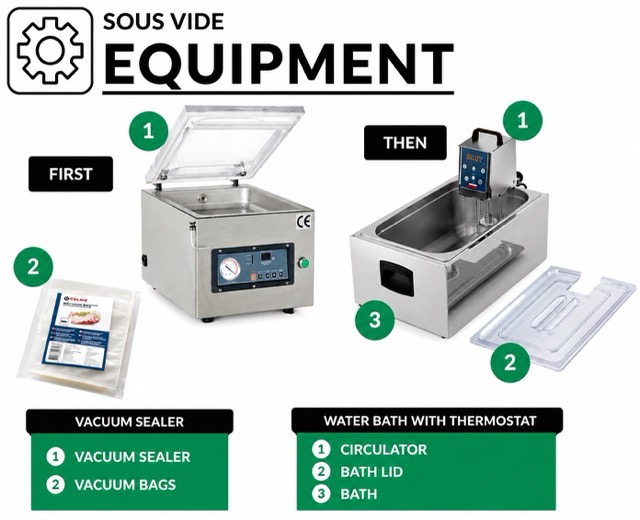
Here's what you'll need:
Vacuum sealer : This is designed to seal food before placing it in a water bath. We recommend
chamber-type vacuum sealers for this purpose. You can read more about choosing a vacuum sealer in
a dedicated article . Simply place the ingredients in the bag, and use the vacuum sealer to remove the air and seal it.
Vacuum packaging bags . Most vacuum packaging bags are made of polyethylene, which is considered a safe plastic. Avoid cheaper plastic bags, which are often made of PVC and can leach harmful chemicals into food.
Immersion circulator : This maintains a constant water temperature for cooking by circulating water through a heated heating element within the appliance. Immersion circulators are similar to a standard immersion heater, but feature a functional housing, a precise temperature control device, a propeller that efficiently circulates the water, and adjustable screw clamps or clips that easily attach to a container or pot of water.
A special container or
gastronorm pan made of steel or plastic is used to hold bags of food to be cooked sous vide. The special container has a lid with a cutout for vertical placement of the circulator. If using standard gastronorm pans (most commonly
GN 1/1-200 mm ), you'll need to cut a cutout in the plastic or metal lid yourself.

A convenient alternative to this DIY approach is to use
special balls , which reduce the exposed surface area of the water and thereby slow down evaporation. This trick allows you to avoid adding water during long cooking times, or to minimize the need for additional water. If additional water is necessary (due to excessive evaporation), it should be added after heating the mixture to a temperature close to the set thermostat temperature.
Pan-frying or
grilling : This is the final step before serving. Depending on the dish, you can place the food on a hot pan to caramelize the outside and make it a little browner and crispier.
The nuances of choosing equipment
Choosing a vacuum sealer (we discussed the approach to choosing a vacuum sealer in detail in a special article )
Based on our many years of sales experience, we've concluded that there are three types of vacuum sealers our customers choose for sous vide cooking:

You can use
inexpensive chamberless vacuum sealers with a special nozzle that pops out of the bag (whether smooth or corrugated) when the sealing bar is engaged. This method creates a slight vacuum in the bag, but when the nozzle is pulled out, the vacuum level in the bag is slightly reduced, as a significant amount of air is re-introduced into the bag in the split second it takes for the spring to push the nozzle out and initiate the seal. Sous Vide sealing in this case is very similar to the results achieved by those who like to use the "Cheap and Cheerful" method, who wrap their products in plastic wrap and then simmer the packages in hot water on a gas stove.

It's more effective to use
a chamberless vacuum sealer with moisture protection for the pump . In this case, we only use
corrugated bags (why? The answer is in
the article ). If the vacuum sealer has both manual and automatic modes, you should switch it to manual mode to interrupt vacuuming and begin sealing the bag when moisture from the product approaches the sealing zone. Allowing juices or marinades into the sealing zone is essential, as this will result in a poor seal (no vacuum, possible product leakage into the thermostatic bath), and the sucked-in moisture can damage the compressor. Although such vacuum sealers do have a moisture separator filter, it's more for emergency situations where the moment of liquid suction is missed due to carelessness. Relying on this filter on a permanent basis is not practical, so the second option described, like the first, is a compromise that indicates the most appropriate choice of vacuum sealer.
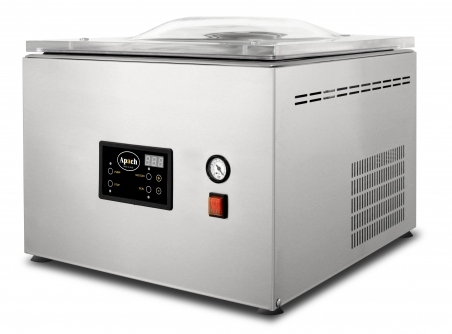 A chamber vacuum sealer
 is very useful in professional kitchens, and it's the most convenient option for using the sous vide technique. It can even be used to vacuum seal liquids, and we'll discuss how to utilize this advantage in practical applications below.
Selection of packages
We recommend special
sous vide vacuum bags that can withstand temperatures of 70-115°C. These bags are typically beige or light brown (unlike white bags for storage at -40 to +40°C), and the packaging is specifically marked as suitable for high temperatures.
Choosing a Thermostat
Thermostats (also known as
Thermoprocessors or simply Sous Vide/Sous-vide) come in
immersion and
fill (stationary) types.

Above, we described the most popular solution:
an immersion circulator paired with a Gastronorm container, a special thermal container, or a saucepan. The thermal processor itself takes up little space and is suitable for a wide variety of containers. The drawback, as noted above, is relatively high heat and water loss through the open surface of the water. We described a compromise solution for this issue
above . Immersion devices typically specify the power and volume they will work most effectively with. For example, the immersion
Sous Vide FROSTY SV94 has a power of 1200 W and can heat 20 liters of water to 56°C in 38 minutes.
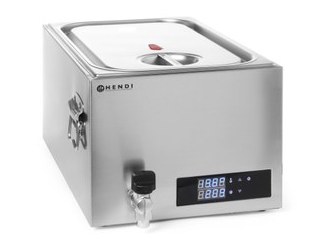 A pour-in thermostat
 is a heat-insulated gastronorm container with a film heater attached to the bottom. It has a lid that prevents water evaporation thanks to a silicone seal around the perimeter. It also comes with a drain valve, which is convenient for draining water from GN1/1 and GN2/1 containers. Unlike an immersion thermostat, a stationary thermoprocessor eliminates the problem of heat and water loss. However, purchasing such a device means you're strictly limited to the volume you choose. It's also best to consider storing the rather large "box" in advance: it's not guaranteed that you'll have a permanent place for it in the kitchen. While stationary thermostats typically require power, the deciding factor is the container's capacity. Most stationary units have a capacity of 15-22 liters, which equates to GN2/3 and GN1/1 gastronorm containers.

Both types of thermostats,
thanks to built-in Bluetooth, NFC, or Bluetooth + Wi-Fi modules, can feature remote control and the ability to program cooking or use standard cooking programs. Dedicated apps for Android or iOS are typically available for download in the appropriate section on the device manufacturer's website or in app stores.
Bottom line. Immersion sous vide cookers take up less space and can be used with any suitable cookware. However, you will need to insulate the cookware and compensate for water evaporation. Stationary sous vide cookers are better suited for longer cooking periods (6-90 hours).

In addition, stationary sous-vide cookers are equipped with special racks that allow for the efficient placement of food (such as steaks) within the container. This convenience is offset by the fixed volume of the cooking container and the need to find storage space for such a large appliance.
What foods can be cooked sous vide?
Product, temperature, time
You can easily find
recommendations online explaining which foods (meat, chicken, fish, eggs, sausages, vegetables, fruits, creams, shellfish...), for how long (45 min. - 96 hours) and at what temperature (41-87°C) should be cooked.
Unless it's a long-term cooking process aimed at "tenderizing" tough meat (sous vide cooking for more than 3 hours converts the collagen that gives meat its toughness to gelatin), the cooking time is calculated based on the thickness of the meat (it needs to heat evenly throughout its entire thickness). The temperature is selected based on the desired degree of doneness (rare, medium, or well-done).
The general principle is that thicker cuts of meat need to be cooked longer than thinner ones. Higher temperatures allow for faster cooking. Lower temperatures may require more time but will preserve the nutrients better.
For example, to cook eggs to a creamy yolk and opaque, soft whites, a temperature of 63°C (145°F) and a cooking time of 45 minutes to 1 hour is required. If the temperature is clear (easy to set), the cooking time is calculated from the time the thermostat reaches the set temperature.
Making Sous Vide Sauces
Many chefs use the sous-vide method to infuse oils, alcohol, and other liquids with creative and unique flavors. For example, you can combine spices or herbs with alcohol, seal them in a vacuum-sealed bag, and sous-vide them at high temperatures for quick and easy extraction. Infuse them in a double boiler for 1-2 hours. Afterward, place the bag in an ice bath for at least 15 minutes. Finally, strain the liquid and store it in an airtight container.
There are many subtleties
They can be learned and mastered over the years, but we will mention some of them now:
1. If the product is thin and lean, it's recommended to add oil to improve heat transfer and spice penetration during cooking. Oil also prevents large spices and herbs from leaving imprints on the product.
2. Slice after cooking (when serving), not before (before vacuum sealing). Slices that are too thin will lose their shape and appetizing appearance.
3. The product in the bag should fit freely (when the bag is much larger than the product, heat transfer is improved), but not bunched up in a corner (the product will take on the shape of the bag after cooking - this will not be aesthetically pleasing).
Disadvantages of the Sous Vide Method
Putting it all together, we get the perfect taste, perfect aroma, and perfect consistency of finished dishes. A dream, not a method, right? However, this technology also has its drawbacks. Let's list them:
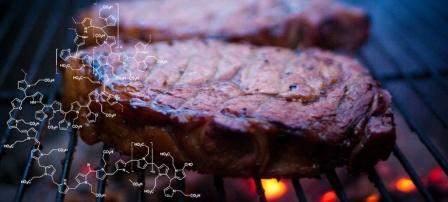 The Maillard reaction
 , which is responsible for the golden brown color of finished dishes, occurs at temperatures above 140°C—much higher than required for any sous vide cooking. This means that to give the finished dish an appetizing appearance, it will need to be seared (1-3 minutes) before sous vide cooking or before serving.

If sous-vide cooking occurs at temperatures
below 57°C ( 130°F) and takes more than 4 hours, there is a risk of botulism bacteria multiplying, as these conditions are particularly favorable. To avoid this and similar risks, choose a higher temperature for foods of questionable quality or for foods that require more than 4 hours of cooking. Another minor drawback related to temperature is the need to use special vacuum-sealed cooking bags instead of cheaper storage bags.

Finally, implementing sous-vide in a form suitable for restaurants, achieving the best results, requires specialized, expensive equipment: a chamber vacuum sealer for sealing food in vacuum bags, and a device that maintains a constant temperature and controls it with precision down to fractions of a degree.
Regarding versatility, it's important to understand that sous-vide cooking is only suitable for foods that are easily packaged (try, for example, bagging a whole lobster). Experts primarily cite baked goods and prepared pastries as foods that shouldn't be cooked sous-vide. From this perspective,
a convection oven is certainly a more versatile and essential appliance.
Sous Vide cooking has become one of the most popular cooking methods in professional kitchens. Its popularity is partly due to the fact that this method doesn't require expensive equipment and can be learned by any of your staff. If you're looking for a consistent, simple, and energy-efficient way to cook food in your restaurant, sous vide is the ideal choice.
This article is copyrighted by Food-Service Company. When copying, a link to the original article is required.
To select professional Sous Vide equipment for your business, please contact our sales department:
Tel. (097) 141-50-50
Tel. (099) 141-50-50
E-mail: info@food-service.com.ua
For repair and maintenance inquiries, or to purchase spare parts for any Sous Vide model, please contact the service department:
Tel. (063) 341-50-50


