-
About everything
- Characteristics
- Description
- Photo / Video(2/3)
- Accessories / Spare parts
-
Technical specifications
| Power, kW |
0.6 |
| Voltage, V |
220 |
| Overall dimensions (L x W x H), mm |
210x210x195 |
| Weight, кг |
4.00 |
| Heating temperature, C |
290 |
| Fast heating when cold |
There is |
| D heating, mm |
180 |
All characteristics
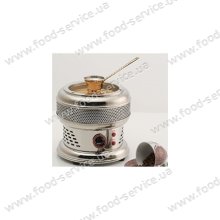
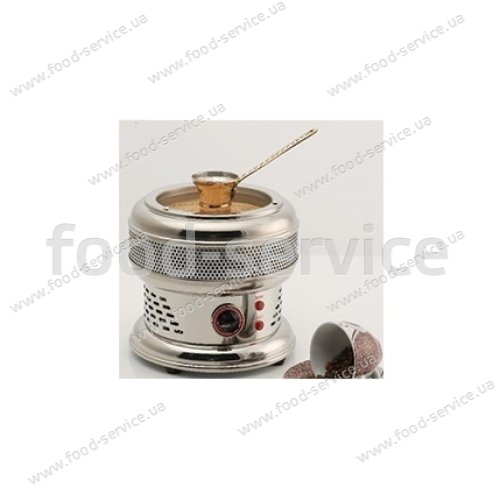
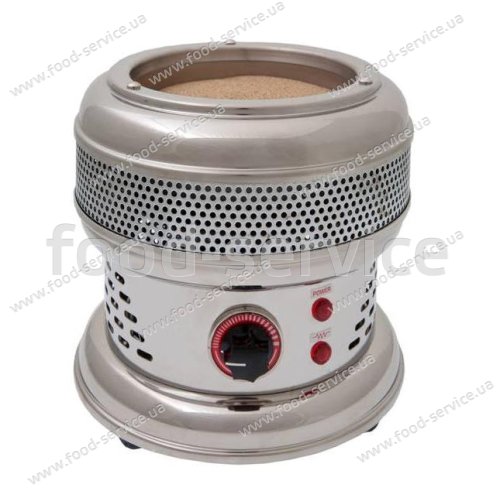
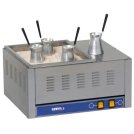
Description. Johny AK/8-5 Inox Sand Coffee Maker
The Johny AK/8-5 Inox sand coffee maker is ideal for making Turkish coffee in the office, at home, and in coffee shops, bars, and restaurants. Of all the coffee-making methods that haven't vanished into oblivion, this is the most ancient. It incorporates the traditions of more than two dozen countries located at the crossroads of three continents. How do you make sand coffee? Just take the coffee, add water, heat it up, and that's it. Simple? No, it isn't. There are many subtleties that must be taken into account. First, the grind. It should be extremely fine, practically like dust. A fine grind will ensure good foaming, and the grounds won't feel so gritty on your teeth. A special pot called a cezve (a Turkish pot) is used for cooking. Cezves are made of stainless steel or copper. Copper ones are more expensive, but they heat more evenly. It is better to use quartz sand (with a higher proportion of quartz and mica) - it is cleaner, heats up faster and more evenly. Coffee shouldn't be boiled, as this will ruin the flavor. And the heating must be uniform. That's why special devices were invented. They vary slightly in design, construction, and dimensions, but the principle is, of course, the same. The sand is included, as is the Turkish coffee pot. Now it's time to describe the entire process in more detail. Pour hot water into the cezve. Cold water is fine; it's not a big deal. Bury the cezve in the sand. The sand is hot at the bottom, but only warm on top. After a couple of minutes, coffee foam appears. Remove the cezve from the sand and let the foam settle. Bury the cezve in the sand again, let the coffee foam rise again, and repeat this process several times. This method is labor-intensive and time-consuming. Pour the coffee into small coffee cups containing the grounds, without straining. Serve cold water separately. If desired, you can add a few drops of water to...
Read in full
|

Feedback and questions.
Write a review
Overall impression:
Вместимость (мл) джезвы которая
идёт в комплекте с модельб Johny AK/8-5 Inox?
Usage time: 0 дней
See all reviews (1)
|
Photos. Johny AK/8-5 Inox Sand Coffee Maker
Video. Johny AK/8-5 Inox Sand Coffee Maker
| Subscribe to the video channel food-service.com.ua |
|
-
Technical specifications. Johny AK/8-5 Inox Sand Coffee Maker
| Power, kW |
0.6
|
| Voltage, V |
220
|
| Overall dimensions (L x W x H), mm |
210x210x195
|
| Weight, кг |
4.00
|
| Heating temperature, C |
290
|
| Fast heating when cold |
There is
|
| D heating, mm |
180
|
|
|
-
Description. Johny AK/8-5 Inox Sand Coffee Maker
The Johny AK/8-5 Inox sand coffee maker is ideal for making Turkish coffee in the office, at home, and in coffee shops, bars, and restaurants. Of all the coffee-making methods that haven't vanished into oblivion, this is the most ancient. It incorporates the traditions of more than two dozen countries located at the crossroads of three continents.
How do you make sand coffee? Just take the coffee, add water, heat it up, and that's it. Simple? No, it isn't. There are many subtleties that must be taken into account.
First, the grind. It should be extremely fine, practically like dust. A fine grind will ensure good foaming, and the grounds won't feel so gritty on your teeth.
A special pot called a cezve (a Turkish pot) is used for cooking. Cezves are made of stainless steel or copper. Copper ones are more expensive, but they heat more evenly.
It is better to use quartz sand (with a higher proportion of quartz and mica) - it is cleaner, heats up faster and more evenly.
Coffee shouldn't be boiled, as this will ruin the flavor. And the heating must be uniform. That's why special devices were invented. They vary slightly in design, construction, and dimensions, but the principle is, of course, the same. The sand is included, as is the Turkish coffee pot.
Now it's time to describe the entire process in more detail. Pour hot water into the cezve. Cold water is fine; it's not a big deal. Bury the cezve in the sand. The sand is hot at the bottom, but only warm on top. After a couple of minutes, coffee foam appears. Remove the cezve from the sand and let the foam settle. Bury the cezve in the sand again, let the coffee foam rise again, and repeat this process several times. This method is labor-intensive and time-consuming.
Pour the coffee into small coffee cups containing the grounds, without straining. Serve cold water separately. If desired, you can add a few drops of water to the cup to help the grounds settle faster. Traditionally, coffee is drunk in small sips and washed down with cold boiled water. Enjoy your coffee. Made of 304 stainless steel
The Johny AK-8/5 sand coffee maker is equipped with:
Hot plate with heating element 0.6 kW.;
Insulating device to prevent heating of the equipment surface;
Temperature regulator;
Copper coffee pot;
Packing special sand.
Included. Johny AK/8-5 Inox Sand Coffee Maker
- apparatus
- package
- sand
- 1 copper Turk
- warranty card (1 year)
Methods of making Turkish coffee. Johny AK/8-5 Inox Sand Coffee Maker
Oriental Coffee (Recipe 1)
10 g of coffee, 100 ml of water, and granulated sugar to taste. Mix the finely ground coffee with granulated sugar in a cezve, lightly roast, and add cold water. Soft water, free of salts, is recommended; if this is unavailable, cooled boiled water can be used. Place the cezve over low heat and bring the contents to a simmer (do not boil). A light foam should form on the surface. If for some reason this doesn't appear, let the coffee rise again. If the cezve is in good condition, serve the coffee and grounds directly into cups, which are placed on a separate tray. Serve cold water with ice or slightly acidified water in a glass with the coffee. Each sip of coffee should be washed down with cold water—this is an Eastern tradition.
Oriental Coffee (Recipe 2)
One of the most common methods of brewing coffee today. There are about five variations of this drink. Depending on the amount of sugar used during preparation, this type of coffee can be bitter, sweet, very sweet, thinner, or thicker.
Subtleties of preparation:
Freshly roasted coffee beans are finely ground. An ibrik/cezve (a small, wide-bottomed, narrow-mouthed coffee brewing vessel) of the required size—for 2, 3, 4, or more cups (60-70 ml per cup)—is used. One teaspoon of sugar (per cup) is added, and three-quarters of the cup is filled with water. When the water boils, add the ground coffee (1-1.5 teaspoons per cup), stir with a spoon, and heat until foam appears. Then add the remaining water and heat again until foam appears, but never bring to a boil. The heat should be very low: the slower the coffee is heated, the better. The main distinctive feature of coffee brewed in the Eastern style lies in its consumption. The drink is served directly from the cezve, without pouring it into cups or straining it. The foam that covers the coffee plays a special role: it is poured into the cups first, and only then is the rest of the coffee poured. The peculiarities of Eastern coffee preparation also dictate the set of additional utensils (or rather, the lack thereof). This drink typically doesn't come with sugar (since it's already been added during brewing) or spoons (since they're not necessary). This coffee is drunk from special small cups with a capacity of 60-70 ml, called "dmitas."
A special Eastern coffee serving option is the so-called coffee set, which includes a cezve, a cup, a saucer, and a spoon. All of this is served on a small, separate tray, with a sugar bowl to the left of the cup and a glass of water to the right.
Eastern coffee can be consumed and served slightly differently (though the essence remains the same). First, skim off the foam with a spoon, then pour the coffee into cups and spoon the foam on top. Etiquette dictates serving this coffee to the guest in a cup with a glass of cold water to the left.
Buy Johny AK/8-5 Inox Sand Coffee Maker by price 17193 грн
text_desc_seo_2
text_desc_seo_3
text_desc_seo_4
Our many years of experience and professionalism have earned us an excellent reputation in the Ukrainian food equipment market. Our competitive prices and product quality will delight you! Happy shopping.
-
Фотографии. Johny AK/8-5 Inox Sand Coffee Maker
Видео. Johny AK/8-5 Inox Sand Coffee Maker
| Подписаться на видео канал food-service.com.ua |
|
-
|










 Popular products